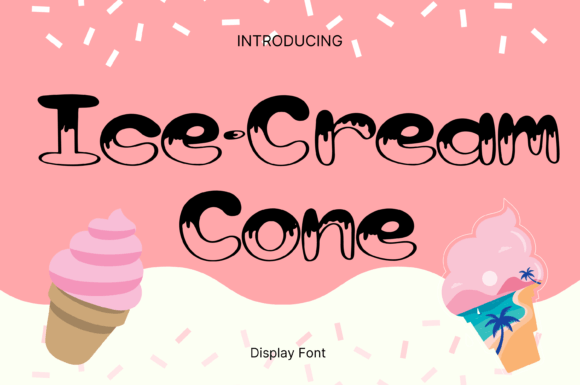
Ice-Cream Cone Font for Web Design Projects
I was working on a redesign for a boutique online store that sells handmade desserts and wanted to bring a fresh, playful tone to the brand’s visual identity. As I started exploring font options for the hero section, Ice-Cream Cone caught my eye. It immediately felt like the right choice — it had that bubbly, youthful energy that matched the brand’s vibe perfectly.
Ice-Cream Cone is a display font with a cool and incredibly cute personality. The rounded edges and light, airy strokes give it a soft, approachable feel, making it ideal for designs that want to communicate joy, fun, and creativity. I tested it in a few different scenarios, including over a bright image banner, in a mobile layout, and as a headline in a landing page section.
One of the first things I noticed was how well it stood out against both light and dark backgrounds. When placed over a pastel-colored dessert photo, the font didn’t get lost — it added a layer of visual interest without overpowering the image. On dark mode sections, it still maintained good contrast, which is crucial for readability and accessibility.
For the header of the homepage, I paired Ice-Cream Cone with a clean sans-serif font for body copy. This combination created a nice balance between decorative and functional typography. The display font worked great for headlines, while the sans serif handled the supporting text without feeling too heavy or distracting.
Another place where this font shone was in call-to-action buttons. Because it’s a short, bold typeface, it performed well on small buttons and links. I used it for phrases like “Shop Now” and “Explore More,” and it added a touch of whimsy that aligned with the brand’s personality.
When designing for mobile screens, I made sure to test the font at smaller sizes. While it remained legible, I found that using it only for larger headings helped maintain clarity. For body text or long paragraphs, I avoided it altogether — it wasn’t built for extended reading sessions, which is common with many display fonts.
I also experimented with using Ice-Cream Cone in digital ads and promotional banners. Its playful nature made it perfect for limited-time offers and seasonal campaigns. It brought a sense of urgency and excitement, especially when paired with vibrant colors and dynamic visuals.
One thing I always check when selecting a font for web projects is whether it includes a variety of styles and weights. In this case, the font offered enough variation to be useful in multiple contexts — from subtle accents to bold titles. However, I did note that it lacked some of the more traditional typographic features like ligatures or alternate characters, so I kept its use focused on decorative elements rather than complex layouts.
Font pairing is an important part of any design system, and I found that Ice-Cream Cone worked best when combined with simple, modern fonts. A minimalist sans serif like Helvetica or Montserrat made for a strong contrast, ensuring that the display font didn’t become overwhelming.
If you’re considering using Ice-Cream Cone in your next project, make sure to review the licensing terms, especially if you plan to use it across multiple platforms or client work. Checking for webfont availability and file formats like WOFF or TTF is also essential for ensuring smooth performance and compatibility across devices.
In the end, Ice-Cream Cone became a key element in shaping the brand’s visual language. It helped create a cohesive and memorable experience for users, reinforcing the playful yet professional tone of the online store. Whether you're working on a creative portfolio, coaching website, or product landing page, this font can add a unique flair to your digital content.
As with any display font, it's important to use it thoughtfully. Reserve it for headers, logos, and short phrases where its character can shine. Avoid using it in areas that require high readability or long-form text. With the right approach, Ice-Cream Cone can elevate your design and help build a more polished online brand experience.